There's a common TV trope where shows start with the end and then spend the rest of the episode unfurling the content that took place in the hours before that "ending." I'm going to deploy that trope today. Here's what's going to happen as a result of yet another insanely tragic and tragically insane school shooting. Nothing. This is America's most popular and sickly unique story. Don't take my word for it. Listen to Neil Heslin, whose 6-year-old son, Jesse Lewis, died in the Sandy Hook Elementary School shooting. "I guess it's something in society we know will happen again, over and over." Even Sandy Hook didn't change anything. But there's plenty more evidence. Here's a chronological list of school shootings in the United States since the year 2000. I should warn you that your trigger finger might get sore from all the scrolling, so you might want to use your non-shooting hand. The last school shooting on the list (for now) is the one that took place in Uvalde. The Texas child massacre was the second-deadliest school shooting on record. Spoiler alert: it won't hold that spot forever. We know that because this is what America is. Societal sociopathy is our brand. Our national pastime is letting kids be killed and doing nothing about it. Just check the numbers. Firearms are now the leading cause of death for U.S. children.
In Uvalde, in addition to two dead teachers, 19 kids, all around ten years-old, we're shot to death by a now-deceased teen who was bullied as a child and bought himself some guns on his 18th birthday. All of those kids were murdered in the same 4th grade classroom. The children will be mourned and the unthinkable pain being experienced by their moms and dads will leave a deepening pit in the stomach of every parent. But when it comes to leadership and laws, this classroom will ultimately be dismissed. We know that because we've seen this show before. The news alerts flash across our iPhones. The cable news channels turn the tragedy into some bizarre form of macabre entertainment with constant coverage of details and insights that don't really matter. And to what end? Because when someone senselessly kills your child, you need the closure of telling Don Lemon or Anderson Cooper how you feel about it in between commercial breaks?
A president, assuming we have a sane one in office at the time of the shooting, will channel our sadness and outrage as Joe Biden did: "When in God's name are we going to stand up to the gun lobby? Why are we willing to live with this carnage? Why do we keep letting this happen?" (Those are the questions we citizens are asking. But, I mean, he's the effing president.)
Great people who could choose to remain silent will instead yell, Enough! and remind us that we know who is to blame for our deranged values. Warriors coach Steve Kerr, a guy who lost a parent to gun violence, had tears in his eyes as he laid it all out. Kerr asked the 50 Senators who block votes on gun control: " Are you going to put your own power ahead of the lives of children?" But Kerr knows the answer. It's already being answered by Senators like Thom Tillis who explained, "It's horrible. And you know what we need to avoid is the reflexive reaction we have to say this could all be solved by not having guns in anyone's hands. We can always talk about reasonable measures, but we also have to talk about better situational awareness." Here's the situation we're aware of: When the book about America's demise is written, these regular mass school shootings will make up a large chapter. And no one will be able to figure out how a wealthy democracy could be a bystander to this sickening rot and do nothing. Like the rest of us, Steve Kerr doesn't need the usual hogwash from Thom Tillis to know that when it comes to letting kids be murdered in large numbers in our schools, enough is never enough.
Thinking, feeling politicians will give voice to our frustration. Chris Murphy did that, and did it well. "This isn't inevitable. These kids weren't unlucky. This only happens in this country and nowhere else. It is a choice. It is our choice to let it continue ... Spare me the bullshit about mental illness. We don't have any more mental illness than any other country in the world. You cannot explain this through a prism of mental illness because we're not an outlier on mental illness … We're an outlier when it comes to access to firearms and the ability of criminals and very sick people to get their arms on firearms. That's what makes America different."
Journalists like David Frum will remind us who put the murder weapons into the hands of this child killer and the many who preceded him and the many more who will follow. "Who put the weapon of mass murder into his hand? The answer to that question is that the public policy of this country armed him. Every other democracy makes some considerable effort to keep guns away from dangerous people, and dangerous people away from guns. For many years—and especially since the massacre at Connecticut's Sandy Hook Elementary School almost a decade ago—the United States has put more and more guns into more and more hands: 120 guns per 100 people in this country."
And I'll play my role. I'll write a few paragraphs to make you feel what you're supposed to be feeling right now. That's my job. I know it'll work because I'm a pretty good writer and as someone who covers the news in America, this is a topic I've had a lot of practice writing about. But I also know these words won't make any real difference and that soon I'll have to come up with a creative new way to cover the next school shooting.
Maybe my opening was a bit misleading. I suggested nothing would happen to our gun laws following this latest slaughter. Something will happen. The gun laws will get worse. After all, a year before Uvalde school shooting, Texas expanded gun rights. Believe that, not the thoughts and prayers. And soon, the Supreme Court's "New York State Rifle decision, which is expected by the end of June, could make the rules even looser. It has the potential to be the most significant—and, depending on how broadly it is written, most disastrous—gun-law decision in a decade."
So we're left with a question. In today's America, is anyone safe from gun violence? Yes. Trump is delivering an address at the NRA's Annual Leadership Forum on Friday, during which audience members won't be able to carry guns. But don't worry. They can get right back to shooting up schools as soon as the speech is over.
Share with
2
PRIMAL PRIMARIES
The big headline from Tuesday's primaries is that Trumpism did better than Trump. From The Atlantic: "Last night's primary in Georgia was a big, fat disappointment for former President Donald Trump: Governor Brian Kemp beat his Trump-endorsed opponent. And in a much more surprising turn of events, Brad Raffensperger, the Georgia secretary of state who refused to play along with Trump's election-fraud fantasy, won his race too." But... US Rep. Marjorie Taylor Greene won her GOP primary in Georgia. Trump press secretary Sarah Sanders won the GOP Arkansas governor primary that basically assures her of winning that position (oh admit it, you missed the lies). And Herschel Walker is one step closer to being the least qualified senator in modern history. He makes Tommy Tuberville look like Harry Reid. Walker is less prepared to be a senator than defenses were to face him during his playing days. Since it's sports related, let's give ESPN the link. "Walker's electability was questioned due to business dealings and his history of violence against women. Walker has been open about his long struggle with mental illness and acknowledged violent urges. He won the primary despite skipping debates with his Republican opponents and making multiple gaffes on the campaign trail."
It's a rough news day. Let's take a break and read about a big wave surfer courtesy of a pulitzer prize winner whose writing is as smooth as a glassy pond. William Finnegan in The New Yorker: Kai Lenny Surfs the Unsurfable.
Bet Your Bot Dollar: "After delving into the console reselling underworld, I was shocked to learn that resellers aren't the primary problem. Instead, they're merely the pawns of the true powerbrokers of the industry: the enterprising developers selling these bots to aspiring flippers in the first place." The Unstoppable Machines Behind the Game Console Shortage.
+ Fearless: "I can't respond to fear or desire now. I'm scared that people are going to be scared, sure. But am I scared that the Russians are going to get me and I'll be raped and murdered and all that? No, I guess I don't have a sense of self anymore. To me, I died two decades ago and everything else is just extra." The Rescuer: In Ukraine, Kathy Stickel has pulled dozens of people out of harm's way by putting herself in it.
+ Patty Hearse: "Beef patties in the ads are not fully cooked, making the burgers appear about 15% to 20% larger than the ones served to customers, the lawsuit says." This is the photographic evidence presented in a lawsuit over fast-food burger sizes.
Share with
6
BOTTOM OF THE NEWS
"On June 18, 1999, Disney released their new Tarzan film in theaters. And, as with every Disney movie, they sold promotional tie-in toys. However, this time, Disney released a toy that caused them a lot of unwanted attention: 'Rad Repeatin' Tarzan.' At first glance, it was just another plastic figure with a handful of action features, including the ability to swing his arms, yell his Tarzan yell and repeat phrases back to you. The problem was, when the toy was packaged, Tarzan's arm was aligned perfectly with his crotch." Mel Mag: Why Do Action Figures All Look Like They're Jerking Off? (Once you see this evidence, you won't be able to unsee it.)
NextDraft 600 Harrison Street, San Francisco, CA 94107
You are receiving this because you signed up for Dave Pell's Next Draft newsletter. If you'd like to stop receiving these emails, simply unsubscribe. No hard feelings. If this email isn't looking quite right, you can view it in your browser.
Did some awesome person forward this issue to you? Subscribe at NextDraft and get it in your own inbox.
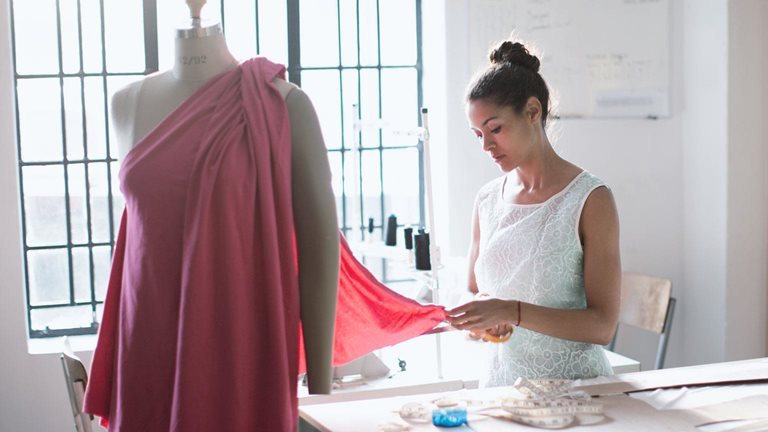
In the past few years, companies across sectors have struggled with supply chain challenges. One of the most counterintuitive approaches I have seen comes from an apparel retailer, whose solution is to turn competitors into collaborators and customers.
Most brick-and-mortar retailers are still catching up with the massive shift to e-commerce, which has accelerated during the COVID-19 pandemic and may well account for a third of all retail sales by 2030. When you've built an extensive network of stores, shifting to a business model in which you receive half of your sales from an online channel is a structural challenge. Suddenly, the old approach—all of your inventory was landlocked in a distribution center in the middle of the country—doesn't make operational sense.
Many retail chains started dealing with this problem a few years ago by shifting significant inventory to their stores, in effect turning them into mini e-commerce order fulfillment centers. This model works when orders contain only one item, and that item is close to the person who made the purchase. In most retail operations, the cost to pack a single item during downtime is seen as acceptable. But most retailers have learned that orders typically contain two or three items (or more) that usually aren't available in the same location. The cost of paying multiple salespeople to pick and pack an order—as well as the added shipping costs for that multiitem order—adds up quickly. Making matters worse, forward-deploying inventory to hundreds or thousands of locations made it harder for retailers to keep up with unpredictable customer demand, which is something of the norm in fashion.
"Most brick-and-mortar retailers are still catching up with the massive shift to e-commerce."
This apparel retailer decided it could do better by restructuring its supply chain. It opened more than a half-dozen smaller fulfillment centers around the country. Even accounting for changes in fashion, these small centers had virtually all the inventory that the retailer's stores and online customers needed and could deliver it in a hurry. The centers were located in areas of lower-cost real estate. Those regions had a more flexible labor market, and the centers could deliver inventory to stores or online orders as needed. By replicating a model more common in fast-moving, highly predictable consumer goods, this retailer reduced online order costs by 15% per order. That's just one of the benefits. The company also slashed working capital by pulling seven weeks of inventory from stores and selling more goods at full price, since it didn't have to mark down items stranded in stores.
This is where the story takes an interesting twist. Once the retailer saw how well its new supply chain network was working, it realized that it had landed on a possible new business. Nearly all of its competitors faced the same problem and a future of supply chain costs accelerating faster than revenues. Why couldn't the retailer apply its new expertise to a cooperative model providing scale benefits and inventory balancing that only the largest big-box retailers can achieve? The math suggested that the retailer would need 250 businesses of its own size to match the scale economies of the larger multicategory retailers. Could it further evolve the model with technology, robotics, and analytics to offer "supply chain as a service" to its competitors?
It's early days still, but the answer seems to be yes. This retailer bought two online logistics companies that had helped it establish the network and found ways to aggregate orders from different businesses to save parcel costs. The net result is $1 in savings per order, which is meaningful for midmarket retailers. It's a "frenemy" strategy that encourages and creates incentives for open-source collaboration among competitors.
By now, so many of us take online ordering and speedy delivery for granted. But I believe their continued acceleration will roil the retail industry for a long time to come, even when COVID-19 is a distant memory. In our research, this is one of the top issues facing retail executives today. Creative retailers like this one are finding ways to turn a fixed-cost, high-capital challenge into a technology-based growth opportunity. Pretty novel.
Here's how companies can make real estate—a prime contributor to the buildup of greenhouse gases—part of their decarbonization efforts.
Follow our thinking
This email contains information about McKinsey’s research, insights, services, or events. By opening our emails or clicking on links, you agree to our use of cookies and web tracking technology. For more information on how we use and protect your information, please review our privacy policy.
You received this email because you subscribed to our McKinsey Quarterly alert list.
This email contains information about McKinsey’s research, insights, services, or events. By opening our emails or clicking on links, you agree to our use of cookies and web tracking technology. For more information on how we use and protect your information, please review our privacy policy.
You received this email because you subscribed to our Sustainability alert list.