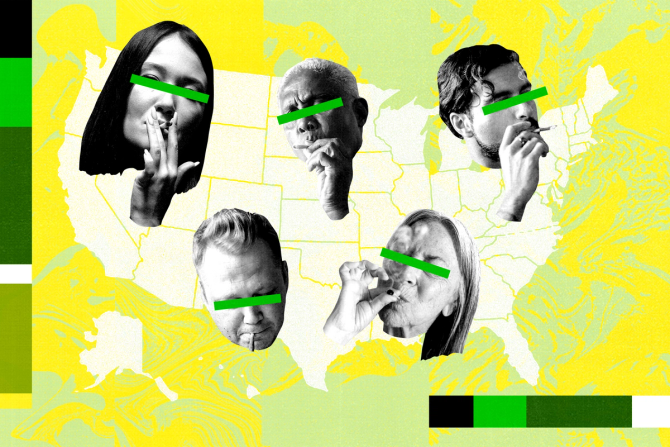
| | | | | | 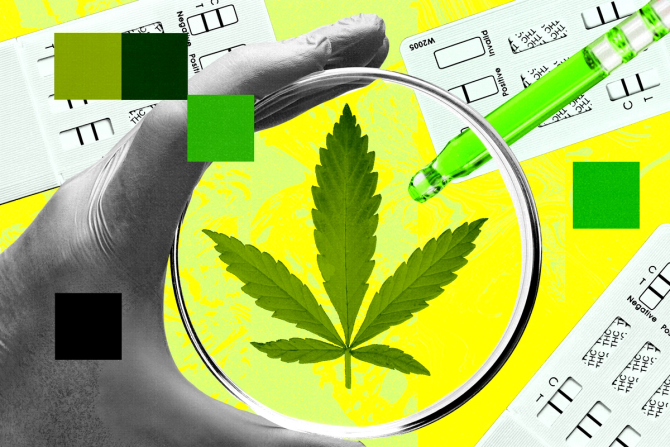 Illustration: Jenny Chang, Photos: Pexels | | IN THIS ISSUE | The race for reliable cannabis testing | Brands embrace nihilism | Hannibal Buress answers our Questionnaire | | | | "Of course."—Boris Johnson, when asked on July 6 if he'd still be prime minister on July 7 "Them's the breaks."—Boris Johnson, announcing his resignation as prime minister on July 7 "Peppa Pig is the greatest British import of this decade."—Quentin Tarantino to Empire | | |  —Interviews by Sherry Qin | | | SOPA Images/Getty Images RadioShack has gotten a lot of media coverage over the last week and a half for a series of eyebrow-raising tweets. They've told Lizzo she's "fine af," claimed to defile an Applebee's, and—most memorably—declared, "If you find a squirter marry her." In an interview with Input, RadioShack's CMO Ábel Czupor declined to share the special formula he's devised for the brand, but it's somehow part of a strategy for reviving the twice-bankrupt company, which is now selling crypto. Though the century-old electronics store is the latest brand to suddenly become horny on main, it's not the first, nor will it be the last. What the internet has called "shitposting" has somehow become the language of modern capitalism. For the fortunate and unfamiliar, shitposting is adopting the tone of Bart Simpson if he was addicted to the internet: irreverent, nihilistic, and in a way that would confuse his parents. When major corporations or embroiled CEOs like Elon Musk shitpost, it feels like the Monopoly man rebranding himself as a Soundcloud rapper. It's cringey and feels artificial, but it works. Brands are now just like the average internet addict: ironically depressed and performatively horny. A sexually excited mega-corporation is guaranteed to cause a rubbernecking event on social media. Brands have been horny for a while now; it's a condition that's afflicted companies ranging from streaming services to Hot Pockets. On Twitter, Dave & Buster's called Doja Cat "mommy." And Snickers winked at users who were concerned about the texture of its candy bar, tweeting, "Good news, contrary to what's trending on Twitter...THE VEINS REMAIN!" "Phew," Musk responded, completing the circle of shitposting life. Following RadioShack's lead, Nutter Butter, a brand owned by one of the largest snack companies in the world, recently tweeted "N is for the way you nut at me," complete with a faux Notes app apology follow-up (yes, RadioShack responded). Regular internet users filled social media with posts and memes that reflected the je ne sais quoi of shitposting. Now the corporations are using it for their own purposes. Brands are as despondent as you are—or at least good at pretending to be. —Ashwin Rodrigues | | | | | | You want the power to invest in what you believe in, and the professional management to help keep your portfolio balanced. With Fidelity Managed FidFoliosSM, you get both—and then some. All you need to do is pick an investment strategy, and Fidelity builds you a diversified stock portfolio spread across a wide range of companies. You have the final say on what graces your portfolio1, and you even receive access to personalized, tax-smart investing strategies2 to help you keep more of what you earn. With a stock portfolio tailored to your goals and index investing created for you, Fidelity Managed FidFoliosSM are ready to get to work with you. Open an account here. | | | | Illustration: Jenny Chang, Photos: Pexels If you smoke a joint or eat a space cake, marijuana's active ingredient, THC (technical name: Tetrahydrocannabinol), moves directly to your brain where it releases dopamine. You feel chill, happy, and hungry for cool ranch Doritos. Though your cravings subside after a few hours and that sweet 420 feeling fades, THC can linger in your bloodstream for weeks or even longer. That's a problem if you have to take a drug test. Say, for example, you're a pilot required to take semiregular drug tests. Even though you're not high and haven't been for days, a sample of your blood or saliva might tell a different story to your employer, one that says you could be impaired. That's like failing a sobriety test a week after having a few beers at a party. Even though marijuana is legal in 19 states and Washington, DC, there's no widely accepted way to measure real-time impairment caused by the substance. That's because THC doesn't affect people the same way alcohol and other drugs do. Instead of working its way quickly through the body, THC lingers, rendering standard drug testing regiments—through blood, hair, or urine tests—largely useless and unable to determine when a person last used. Plus, THC hits people differently; frequent users may not feel high despite having large amounts of THC in their blood, but a new smoker might struggle to walk a straight line after taking a hit. Pinpointing impairment to marijuana use is a tricky physiological puzzle that has so far bested researchers. But tech companies are racing to crack the code and, in the process, capitalize on a market potentially worth billions of dollars. A market analysis estimates the global drug testing market will be worth about $10.7 billion by 2030. Marijuana testing leads the market. That's a hefty incentive for tech companies and a sizable enough profit to make navigating all the nuances of THC testing worth it. There's no consensus on what type of tech is best, and there's no agreement that any options really work. That's cleared a path for creative approaches to the problem. There are breathalyzers in development that would analyze samples for teeny tiny bits of THC that are only present soon after someone consumes. Then there are cognitive tests that use computers or phones to ask what should be easy questions. They try to see if a slower response time means someone is too high to work or drive. The developments are highly scrutinized by legal experts wary of smartphones and breathalyzers promising to solve the evasive problem. The tech will need to survive court challenges to become standard-bearers in the way that a .08 blood alcohol level has. Some wonder if Big Tech can ever live up to its promises of solving the drug testing issue. The race for reliable tech is playing out against a larger cultural shift on marijuana, legalization, and decriminalization. Fears of reefer madness are fading and the stigma around marijuana use is dissipating. But employers, especially those with workers who operate heavy machinery or drive, are stuck between a rock and a hard place; quit drug testing and risk a lawsuit following a workplace accident or hikes in insurance costs, or keep traditional drug testing, and potentially be sued for wrongful termination by an employee who tests positive for being impaired at work. It's also made the landscape chaotic for employees who wonder if it's okay to smoke a bowl on the weekend or if they'll lose their jobs after a random drug test days later. Continue reading this story by Amanda Hoover. | | | Marcus Price Hannibal Buress is a stand-up comedian from Chicago. He's also a television writer and actor with credits including Saturday Night Live, The Eric Andre Show, Broad City, and many others. Currently, he's producing and performing music as Eshu Tune. His first EP dropped in April, and it's better—and less joke-centric—than you might think. Buress is so focused on his music right now, he won't even answer our question about laughter. We're glad to have him anyway. What's the best advice you ever received?
We all die. Don't take it so seriously.
What's the most embarrassing song you'll admit to liking publicly?
"CMDGT" by Eshu Tune.
What fictional person do you wish were real?
God.
What real person do you wish were fictional?
Larry Bird. How would you explain TikTok to your great-grandparents?
A record player but it keeps skipping and it's a video and it's Chinese face-scanning software. What always makes you laugh?
[Buress declined to answer this question. Instead, we recommend this throwback bit, "Hannibal Buress Didn't Cry Watching the Movie 'Up,'" which makes us laugh.] If you were given a billboard in Times Square, what would you put on it?
Eventbrite listings used to pull people into a religion but they're disguised as networking events. —Interview by Ashwin Rodrigues | | | Sidekick's Travel Guide just dropped. Check out the best products available for your next trip. [Sidekick] Working for yourself is not necessarily better than working for someone else if it means cobbling together a bunch of unrelated and unpredictable sources of income. [Money with Katie] As a recession looms, some brands are actually increasing their influencer marketing budgets. [Marketing Brew] Made in the USA: As more companies bring manufacturing stateside, here's what they can and can't say about being American-made. [Retail Brew] Tai Verdes, who rose to fame on TikTok in 2020, talks to the Brew about songwriting, the myth of overnight success, and playing the long game. [Business Casual] More tech: As we speak (er, type), drones are delivering groceries and brain chips are being developed. Emerging Tech Brew is the free newsletter to keep you informed on all of this tech and more. Subscribe for free. | | | | | | | ✢ A Note From Fidelity Investing involves risk, including risk of loss. Morning Brew and Fidelity are independent entities and are not legally affiliated. 1You may exclude up to five individual stocks or two industries in your account. 2Tax-smart (i.e., tax-sensitive) investing techniques, including tax-loss harvesting, are applied in managing certain taxable accounts on a limited basis, at the discretion of the portfolio manager, primarily with respect to determining when assets in a client's account should be bought or sold. Assets contributed may be sold for a taxable gain or loss at any time. There are no guarantees as to the effectiveness of the tax-smart investing techniques applied in serving to reduce or minimize a client's overall tax liabilities, or as to the tax results that may be generated by a given transaction. Fidelity Managed FidFolios℠ provides discretionary investment management for a fee. Advisory services offered by Fidelity Personal and Workplace Advisors LLC (FPWA), a registered investment adviser. Brokerage services provided by Fidelity Brokerage Services LLC (FBS), and custodial and related services provided by National Financial Services LLC (NFS), each a member NYSE and SIPC. FPWA, FBS, and NFS are Fidelity Investments companies. Fidelity Brokerage Services, Member NYSE, SIPC. © 2022 FMR LLC |  | Written by Rohan Anthony, Stassa Edwards, Amanda Hoover, Ashwin Rodrigues, and Sherry Qin Was this email forwarded to you? Sign up here WANT MORE BREW? Industry news, with a sense of humor → - CFO Brew: your go-to source for global finance insights
- Emerging Tech Brew: AI, crypto, space, autonomous vehicles, and more
- Future Social: the Brew's take on the world of social media
- HR Brew: analysis of the employee-employer relationship
- IT Brew: moving business forward; innovation analysis for the CTO, CIO & every IT pro in-between
- Marketing Brew: the buzziest happenings in marketing and advertising
- Retail Brew: retail trends from DTC to "buy now, pay later"
Tips for smarter living →  Podcasts → Business Casual, Founder's Journal, Imposters, and The Money with Katie Show Podcasts → Business Casual, Founder's Journal, Imposters, and The Money with Katie Show  YouTube YouTube Accelerate Your Career with our Courses → | ADVERTISE // CAREERS // SHOP // FAQ
Update your email preferences or unsubscribe here.
View our privacy policy here.
Copyright © 2022 Morning Brew. All rights reserved.
22 W 19th St, 4th Floor, New York, NY 10011 | | |