| | | | | | 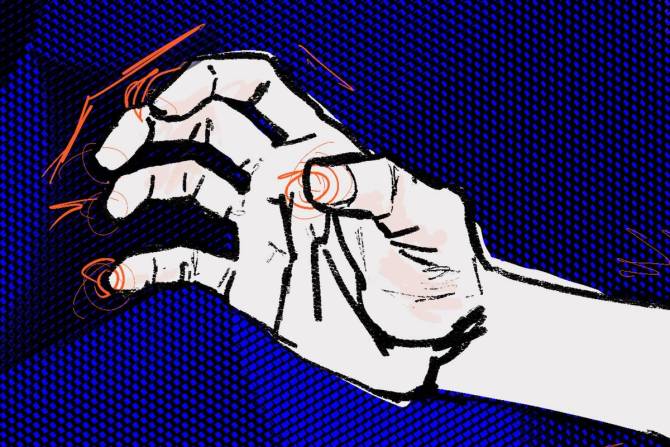 Dianna "Mick" McDougall | | IN THIS ISSUE | Can the metaverse shed tech's persistent problem? | Bomani Jones explains TikTok | Artificial intelligence catches feelings | | | | "I should be writing about what I'm feeling and the stories I want to tell, but I'm just forcefully squeezing out words because I need to satisfy someone."—BTS's Suga on the band's announcement that they're taking a break "I realize that removal of access will feel sudden and unexpected, and this is not the experience I wanted for you."—Coinbase CEO Brian Armstrong in an email to 1,100 recently laid-off employees "I feel I'm going to be a lit-ass grandma."—Megan Thee Stallion to Rolling Stone | | | 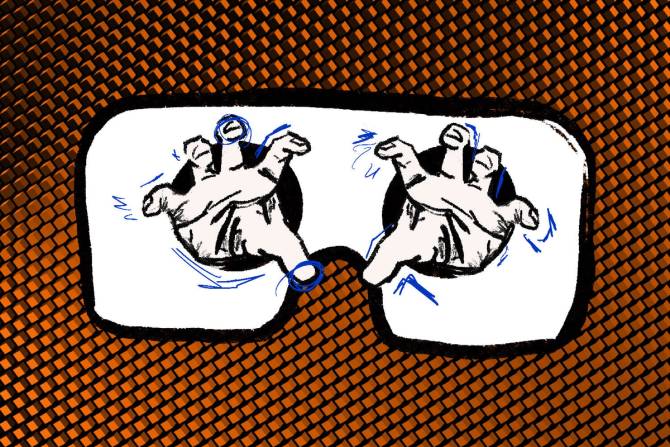 Dianna "Mick" McDougall Nina Jane Patel designed her avatar, a cartoonlike version of herself with blonde hair and freckles, and entered Meta's Horizon Venues, a 3D digital world, using a virtual reality (VR) headset. She was there for less than a minute before a group of men avatars touched and groped her avatar without consent, taking photos as they harassed her. Patel detailed the "horrible experience" in a December 2021 Medium post. It "happened so fast and before I could even think about putting the safety barrier in place," she wrote. "I froze." Patel isn't the only woman to report digital sexual harassment on Meta's virtual reality platforms or in other digital worlds in the metaverses. When Facebook rebranded itself to Meta last fall, it mainstreamed the concept of living a digital life in 3D metaverses, or virtual worlds where people can meet and play. But the early presence of digital sexual harassment, which can include nonconsensual touching, verbal harassment, and simulation of sexual assault on avatars, raises questions about whether this new immersive tech can shed old tech's problems. It's not that the metaverse creates new opportunities for digital sexual harassment—social media has always been rife with gender-based harassment—but virtual reality technology dissolves the gap between the physical and digital selves, creating immersive experiences that heighten both realism and emotional connection. Users watch as digitally rendered hands grope a representation of their own body, and it all feels increasingly real, just as metaverse designers intended. "All of these innovations and technology that can make a digital life seem like a real one with real feelings, that has exacerbated the impact of sexual misconduct in a metaverse," Michael Bugeja, a professor at Iowa State University who teaches media ethics and technology, said. For those like Patel who experience digital sexual harassment, it can be degrading and emotionally devastating. It's "surreal," it's "a nightmare," Patel wrote. Despite this, and despite Big Tech's history of ignoring the concerns of groups particularly vulnerable to online harassment, sexual harassment and its aftermath are often glossed over or ignored by developers. It's a problem that needs a solution, especially as better, more realistic haptic technology–tech that mimics the effects of touch– comes to the metaverse. Researchers at Carnegie Mellon University recently developed a VR attachment for a headset that sends ultrasound waves to the mouth, allowing people to feel sensations on the lips and teeth (fingertips are the other haptic hotspot, where it's easiest for developers to send signals of feeling). With the mouth attachment, players can feel spiders, raindrops, and even a stream from a water fountain on their lips. They can simulate brushing their teeth. But headlines ran away with the advances by declaring that users would soon be able to kiss, and subsequently feel the kiss on their physical bodies, in the metaverse. For now, that's not true. But developers are looking for ways to mimic touch that feels intimate and real. Another company, Teslasuit, introduced a full-body haptic suit that resembles a wetsuit. It can capture the feeling of bullets, for example, or a hug, wanted or otherwise. Keep reading this story by Amanda Hoover. | | | 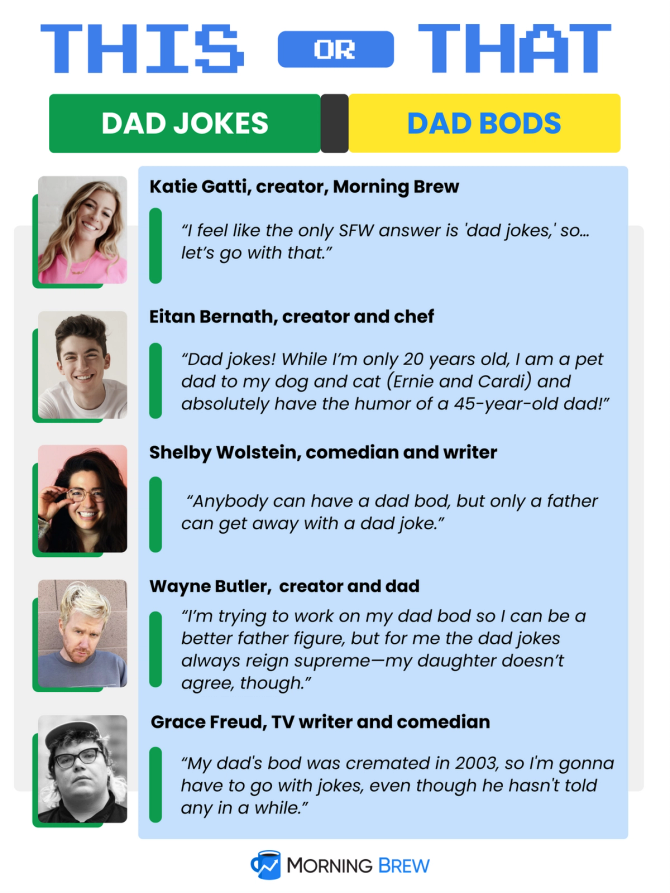 —Interviews by Sherry Qin | | | | | | What happens to your home security system when your power goes out? Or an intruder cuts the power? Security ain't all that secure if it goes down as easily as the electricity does. You'll never be a sitting duck with SimpliSafe. They have backup batteries and a cellular connection if your power gets cut off. And if an intruder destroys your system, they automatically send for help. Protect every inch of your home with award-winning, 24/7 professional monitoring and video verification. Plans cost under $1 a day, and there's no long-term contract or hidden fees. Get some serious home security and save 40% on your SimpliSafe system here. | | | | HBO Bomani Jones is a journalist, sportscaster, and the host of Game Theory with Bomani Jones on HBO. What's the best advice you ever received?
When I started writing, my brother told me something I've never forgotten: A great argument isn't one a genius can't refute, but one a fool can't refute. That's a great reminder to keep everything at eye level. What's the most embarrassing song you'll admit to liking publicly?
Hmmm, I'm pretty confident in my musical taste, and shameless when I like something a little trashy. But singing along with the Confederate nostalgia of "The Night They Drove Old Dixie Down"? It makes me feel a little weird. What fictional person do you wish were real?
Stringer Bell from The Wire. Because if he was real, Omar and Brother Mouzone would have let me come with them. I would have found my own gun and everything, just for the joy of opening that snake's chest up with blazing hot bullets. What real person do you wish were fictional?
Stringer Bell. If he were fictional, then maybe West Baltimore wouldn't have had to worry about one of its native sons assisting with gentrification while flooding the streets with poison. I know, at this point, you're thinking "Stringer Bell isn't a real person," but I can't tell. I was watching a Booking.com commercial the other day and what did I see? The ghost of Stringer Bell with some fake British accent. If I didn't already know he was dead, I would have called that guy about that pistol. How would you explain TikTok to your great-grandparents?
So my oldest grandparent was born in 1895, meaning this great-grandparent was born, at the latest, during Reconstruction. I would probably start with "it's got dancing white women." I don't know if it would make that great-grandparent download the app or not, but a hard-and-fast decision would be made just off those five words. What always makes you laugh?
The Simpsons. To this day. Thirty straight years, still making me laugh from my belly. If you were given a billboard in Times Square, what would you put on it?
It's not what I would put on, but what I would take off. Clearly, I'd put Game Theory with Bomani Jones on the billboard in Times Square. And that happened! In March, the show was in lights at 42nd and Broadway. The problem? It was up for like eight seconds, then they rolled onto the billboard what seemed like another 349 shows! Get those off of there! Leave Game Theory up all day! —Interview by Ashwin Rodrigues | | | Google engineer Blake Lemoine claimed last week that the company's chatbot, LaMDA, is sentient—enough that it may have rights, like a person. That claim has been broadly dismissed by others at Google and tech experts, particularly after Lemoine said he drew on his religious beliefs to make the determination: "Who am I to tell God where he can and can't put souls?" he tweeted. Whether AI can convincingly mimic sentience—meaning it can show perception and knowledge—is vastly different from being sentient. But as the tech learns more about human speech patterns and affectations, the experience of chatting with AI may feel eerily real. Plus, humans have an affinity for assigning personalities to inanimate objects (remember your connection with your favorite stuffed animal?). It makes sense it'd be hard to shake a sense of personhood from a bot explicitly telling you, "I am, in fact, a person," and sharing cloned emotions in a chat to make its case. Perhaps it doesn't matter if a bot is actually sentient; what matters is human perception of the bot. In that respect, Spike Jonez's movie Her was spot on. To switch sci-fi references: The question isn't about an apocalyptic robotic takeover where machines will join forces and plot an uprising, but about what people will do with AI's suggestions. You probably already take AI recommendations over those of another human when making some decisions, and people tend to find faces created by AI more trustworthy than real ones. That AI can gain humans' trust and influence our decisions could be a cause for concern, particularly because the tech reflects society's racial and gender biases. For most people, AI is a fun retreat. Dall-E, the bot that's made Twitter fun again with warped creations as surreal as its namesake's masterpieces, can make images of, well, anything—as long as you give it the right key words. Want to see Nosferatu take the stage in Ru Paul's Drag Race? Sashay away. Hitting a bit closer to home is AYTA, the bot designed to tell you whether you're the guilty party in a conflict, based on the subreddit r/AmItheAsshole? Entertaining, yes. But the bot may lack the nuance needed to settle drama. AI's feats are impressive, but it's not ready for the big, existential unknowns. As any tech nerd can tell you, its output is only as good as its input. —Amanda Hoover | | | | | | Shake up your meal plan (literally). One Huel serving has all 27 essential vitamins & minerals, fiber, and phytonutrients (aka the good bits from plants). It's waaaay easier than cooking: Just shake it up with water and you've got breakfast or lunch on the go. Want a free T-shirt, a free shaker, and free shipping on your first order, plus 15% off (with code Brew15)? Get Huel now. | | | | Move-to-earn in the metaverse might be the future of fitness, but it might also be a Ponzi scheme. [Morning Brew] We visited Bowery Farming, an indoor farm that's changing the definition of "modern farmer." [Emerging Tech Brew] Want to burn a few thousand dollars buying property in the metaverse? We've got you. [Morning Brew] Rescinding job offers is not only a garbage move, but it comes with big reputational risk. [HR Brew] Inflation hurts, but beauty brand Miss A has built a multimillion-dollar empire by selling products at $1. [Retail Brew] Nora and Scott chat with concert promoter Peter Shapiro about the big business of putting on live shows. [Business Casual] Take a quick tour through art museums in the metaverse. [Morning Brew] Do as the smart money does: With award-winning AI that automatically rebalances your trades to enhance your returns, Q.ai helps you invest like the pros. Get a $100 bonus when you sign up for the no-fee platform today.* *This is sponsored advertising content. | | | | |  | Written by Stassa Edwards, Amanda Hoover, Ashwin Rodrigues, and Sherry Qin Was this email forwarded to you? Sign up here WANT MORE BREW? Industry news, with a sense of humor → - Emerging Tech Brew: AI, crypto, space, autonomous vehicles, and more
- Future Social: the Brew's take on the world of social media
- HR Brew: analysis of the employee-employer relationship
- IT Brew: moving business forward; innovation analysis for the CTO, CIO & every IT pro in-between
- Marketing Brew: the buzziest happenings in marketing and advertising
- Retail Brew: retail trends from DTC to "buy now, pay later"
Tips for smarter living →  Podcasts → Business Casual, Founder's Journal, Imposters, and The Money with Katie Show  YouTube Accelerate Your Career with our Courses → | ADVERTISE // CAREERS // SHOP // FAQ
Update your email preferences or unsubscribe here.
View our privacy policy here.
Copyright © 2022 Morning Brew. All rights reserved.
22 W 19th St, 4th Floor, New York, NY 10011 | | |