The real-estate business is trending green. What will future portfolios look like?

 ‌ ‌ ‌ ‌ ‌ ‌ ‌ ‌ ‌ ‌ ‌ ‌ ‌  ‌ ‌ ‌ ‌ ‌ ‌ ‌ ‌ ‌ ‌ ‌ ‌ ‌  ‌ ‌ ‌ ‌ ‌ ‌ ‌ ‌ ‌ ‌ ‌ ‌ ‌  ‌ ‌ ‌ ‌ ‌ ‌ ‌ ‌ ‌ ‌ ‌ ‌ ‌  ‌ ‌ ‌ ‌ ‌ ‌ ‌ ‌ ‌ ‌ ‌ ‌ ‌  ‌ ‌ ‌ ‌ ‌ ‌ ‌ ‌ ‌ ‌ ‌ ‌ ‌  ‌ ‌ ‌ ‌ ‌ ‌ ‌ ‌ ‌ ‌ ‌ ‌ ‌  ‌ ‌ ‌ ‌ ‌ ‌ ‌ ‌ ‌ ‌ ‌ ‌ ‌  ‌ ‌ ‌ ‌ ‌ ‌ ‌ ‌ ‌ ‌ ‌ ‌ ‌  ‌ ‌ ‌ ‌ ‌ ‌ ‌ ‌ ‌ ‌ ‌ ‌ ‌  ‌ ‌ ‌ ‌ ‌ ‌ ‌ ‌ ‌ ‌ ‌ ‌ ‌  ‌ ‌ ‌ ‌ ‌ ‌ ‌ ‌ ‌ ‌ ‌ ‌ ‌ .
McKinsey & Company
On Point | TODAY'S NEWS. TOMORROW'S INSIGHTS
New developments
In the news
• Greener buildings, stronger portfolios. The idea that people are willing to pay more for sustainable buildings has often been debated. But according to a 2018 study, rental and sales prices included a 6.0% and 7.6% premium, respectively, for green-certified buildings. Moreover, 63% of leading investors agree that greening strategies can lead to higher occupancy, rents, and overall value. Consequently, more leaders are considering how the financial risks of inaction might affect future portfolio values. Vivid Economics, a McKinsey company, estimates it will cost $5.2 trillion over the next decade to decarbonize the built environment. [WEF]
• Turn down the lights. In Asia, solutions for decarbonizing the industry are emerging from both the public and private sectors. In Hong Kong and mainland China, for example, one real-estate company is offering tenants free energy audits as a way to understand energy consumption better. In addition, one Asian country has launched a fund that provides businesses with incentives to make their industrial facilities more energy efficient, covering up to half of the qualifying costs. Such cross-stakeholder efforts could be key to helping the industry reach net zero. [Fortune]
A study of a diversified equity portfolio found that climate risks could reduce annual returns toward the end of the decade by as much as 40%.
Our insights
• Reassessing value. Real estate drives approximately 39% of global emissions, largely from the manufacturing of materials used in construction (such as steel and cement) and the energy consumed by buildings. That carbon footprint, along with other factors—like the physical threats of storms, floods, fires, and extreme heat—has led to a reckoning on asset valuations. Several major real-estate companies have conducted internal analyses and found that potential losses for some debt portfolios could double over the next several years.
• Reenergizing real estate. Decarbonizing existing buildings to meet new regulations can be costly. For example, it could take up to $24.3 billion to retrofit the 50,000 buildings covered by New York City’s decarbonization law. However, there’s an opportunity for real-estate leaders to both revalue and future-proof their portfolios while creating new sources of value—like outfitting buildings with solar arrays and batteries so properties can double as local sources of energy generation and storage. See three actions real-estate leaders can take to thrive during the climate transition.
— Edited by Andrew Simon   
Get real
Was this forwarded to you? Sign up here.
Or send us feedback — we’d love to hear from you.
McKinsey & Company
Follow our thinking
LinkedIn Twitter Facebook
This email contains information about McKinsey’s research, insights, services, or events. By opening our emails or clicking on links, you agree to our use of cookies and web tracking technology. For more information on how we use and protect your information, please review our privacy policy.
You received this email because you subscribed to the On Point newsletter.
Manage subscriptions | Unsubscribe
Copyright © 2022 | McKinsey & Company, 3 World Trade Center, 175 Greenwich Street, New York, NY 10007
                                                           

How to inspire responsible tech product management

 ‌ ‌ ‌ ‌ ‌ ‌ ‌ ‌ ‌ ‌ ‌ ‌ ‌  ‌ ‌ ‌ ‌ ‌ ‌ ‌ ‌ ‌ ‌ ‌ ‌ ‌  ‌ ‌ ‌ ‌ ‌ ‌ ‌ ‌ ‌ ‌ ‌ ‌ ‌  ‌ ‌ ‌ ‌ ‌ ‌ ‌ ‌ ‌ ‌ ‌ ‌ ‌  ‌ ‌ ‌ ‌ ‌ ‌ ‌ ‌ ‌ ‌ ‌ ‌ ‌  ‌ ‌ ‌ ‌ ‌ ‌ ‌ ‌ ‌ ‌ ‌ ‌ ‌  ‌ ‌ ‌ ‌ ‌ ‌ ‌ ‌ ‌ ‌ ‌ ‌ ‌  ‌ ‌ ‌ ‌ ‌ ‌ ‌ ‌ ‌ ‌ ‌ ‌ ‌  ‌ ‌ ‌ ‌ ‌ ‌ ‌ ‌ ‌ ‌ ‌ ‌ ‌  ‌ ‌ ‌ ‌ ‌ ‌ ‌ ‌ ‌ ‌ ‌ ‌ ‌  ‌ ‌ ‌ ‌ ‌ ‌ ‌ ‌ ‌ ‌ ‌ ‌ ‌  ‌ ‌ ‌ ‌ ‌ ‌ ‌ ‌ ‌ ‌ ‌ ‌ ‌ .
McKinsey & Company
Share this email LinkedIn Twitter Facebook
Daily Read
AN ARTICLE A DAY, PICKED BY OUR EDITORS
Inclusion, privacy, and sustainability—these key aspects of responsible stewardship often trail behind performance as a priority during tech development. Innovating responsibly requires meeting evolving customer and regulatory concerns on data use, the planet, and combatting bias. It’s quickly becoming a core value of tech. But as critical as it is, the intangibility of ‘responsibility’ can make it difficult to facilitate. Don’t miss a new article on strategies product managers can take to instill values of responsible innovation, design, and management into their own organizations.
— Sarah Skinner, digital editor, New York
Three colored spherical objects on a black and gray background
 
Responsible product management: The critical tech challenge
Prioritizing privacy, sustainability, and inclusion will soon be essential to successful tech development. For product managers to make responsible innovation a core discipline, companies must first lay the foundation.
Step toward innovation
Quote
Quote of the Day
“Sometimes something unexpected could be a latent interest or something that can give you a lot of purpose. Both can be of service to others and give you a lot of satisfaction and joy. So we have to be always on the lookout for opportunities to express ourselves beyond what we do in our day jobs.”
—Manish Chopra, senior partner, on his experience writing a book in the latest episode of My Rookie Moment
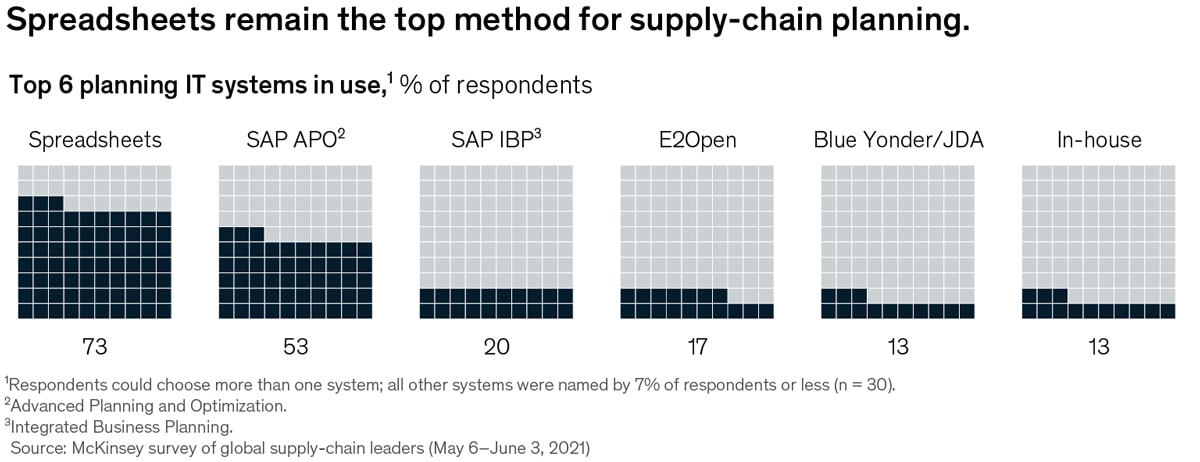
Chart of the Day
Chart of top methods for supply-chain planning
See today's chart
Also New
Errol Pierre headshot
Health equity: Activating meaningful change
The COVID-19 pandemic has highlighted longstanding health and social inequities in healthcare and raised the urgent question of how health equity can be achieved.
Address the issues   >
Two men in automatized high rack warehouse looking at tablet
IoT comes of age
McKinsey research shows that adoption of IoT technologies has increased exponentially the past five years—but successful implementation still eludes some. Here's how to get it right.
Connect physical and digital worlds   >
The mainstreaming of additive manufacturing
After 40 years of development, what will it take for additive manufacturing to become more than a niche technology?
Create a healthier planet   >
McKinsey & Company
Follow our thinking
LinkedIn Twitter Facebook
Share these insights
Did you enjoy this newsletter? Forward it to colleagues and friends so they can subscribe too.
Was this issue forwarded to you? Sign up for it and sample our 40+ other free email subscriptions here.
This email contains information about McKinsey’s research, insights, services, or events. By opening our emails or clicking on links, you agree to our use of cookies and web tracking technology. For more information on how we use and protect your information, please review our privacy policy.
You received this email because you subscribed to the Daily Read newsletter.
Manage subscriptions | Unsubscribe
Copyright © 2022 | McKinsey & Company, 3 World Trade Center, 175 Greenwich Street, New York, NY 10007