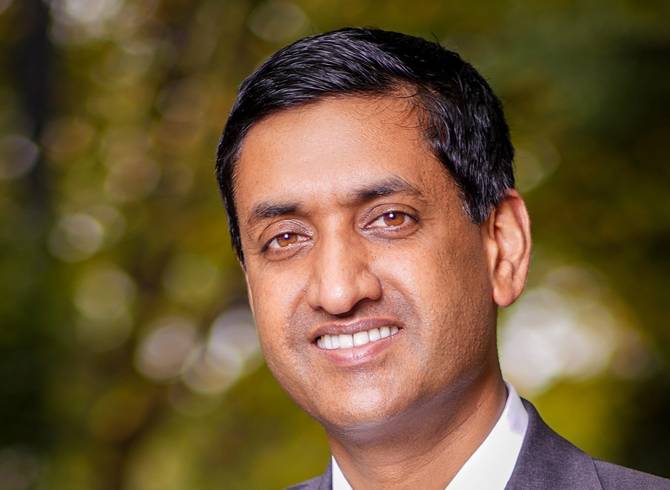
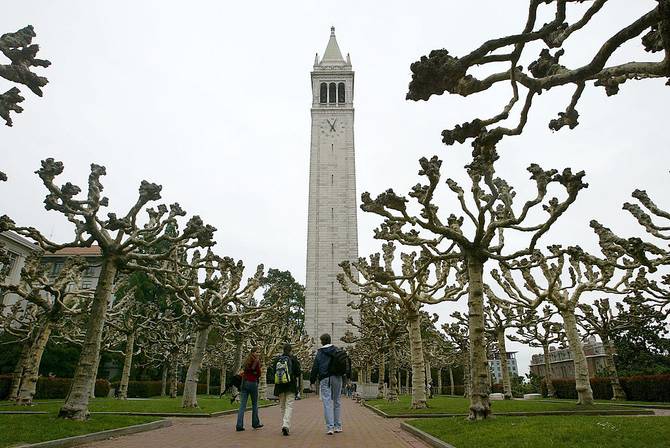
| | | | | |  Hoi Chan | | IN THIS ISSUE | Whose fault is it when employees leave? | Why we should move tech jobs out of Silicon Valley | NIMBYs take on Berkeley | | | | Good morning. I'm sure that many of you are looking for ways to help Ukrainians whose lives have been upended in the past week. Here's a very 2022 suggestion: Book an Airbnb in the country. You won't actually go, but it's a fast and direct method for getting money into the hands of Ukrainian people. Airbnb scrapped guest and host fees for bookings (so none of the funds will go to the company), and payments are released to the host 24 hours after the property's check-in time. It's certainly not my idea. Thanks to a social media campaign promoted by Airbnb CEO Brian Chesky, more than 61,000 nights were booked in Ukraine on March 2–3. People are not only booking stays in Ukraine, but they're also sending messages of support through Airbnb's chat feature. Some of the exchanges between guests and hosts are incredibly moving, with one Ukrainian host replying, "You can't even imagine how pleased we are to hear that we are not alone, tears in our eyes." Another host said they would donate the funds to charity and offer up their apartment to people who lost their homes. It's moments like these that give me a little hope during such a dark time. Praying that one day soon we'll be able to book an Airbnb in Ukraine and a plane ticket to go along with it. —Neal Freyman | | | | | | | | | Sam Garvin Ro Khanna is the US representative for California's 17th district—which may sound just like any other district until you realize it's in the heart of Silicon Valley. Khanna has seen firsthand how tech innovation can transform communities, and in his new book, Dignity in a Digital Age, he lays out a roadmap for spreading tech jobs from Silicon Valley to rural areas across the US. We chatted with Rep. Khanna about some of the big ideas in his book. Who did you write Dignity in a Digital Age for? I wrote the book for tech leaders to think about how they can create economic opportunity in rural America in Black and Brown communities. I wrote the book for Americans left out of the modern economy, to provide a roadmap for participating in it. And I wrote the book for policymakers to pay more attention to communities that have been totally excluded from modern wealth generation. A big theme in your book is spreading tech jobs throughout the US. But in the past 10 years, communities that have seen huge tech booms, like Austin, have also seen housing prices skyrocket. How do you mitigate the cost of housing when you're trying to create a new tech hub? We have to learn the lessons of things we did poorly in Silicon Valley or in other parts of the country that have seen these tech metropolises emerge. We need to disperse these jobs—and the more people who can work from rural communities and work from their own hometowns, the less you're going to have the pressures of housing crunches that you have in the Bay Area. That's how you can have a Silicon Valley member of Congress advocating for job growth outside his own district. But two, you need to build more affordable housing. There were artificial restrictions on housing in the Bay Area. A lot of NIMBYism. And so we need to build more housing. How do you solve the "technological illiteracy" of Congress? Should we put an age limit on running for political office, as Elon Musk has suggested? I wouldn't be for an age limit (laughs). You don't have to be a techie to make tech policy. And you don't have to work in tech. But you do have to have some basic experience, right? [Members of Congress] should be managing their own social media accounts, tweeting for themselves every now and then. They should get a digital wallet or go on Coinbase and see what it's like. Even if they don't agree with everything, they should take time to visit some of these tech companies, just to get an understanding of what basic digital life is like and how it works. And then they'll have the common sense to regulate it. But I think that there's a disconnect in how so many people are living their digital lives and members of Congress. Should members of Congress be required to run their own TikTok accounts to learn more about social media? They should probably at least have seen TikTok videos. If every social media company came to you today and said, "Rep. Khanna: We will do whatever it takes to make the world a better place. Just tell us what to do." What is the first change that you would ask them to make? I'd say hire 100 philosophy majors, political science majors, journalists, and people who are liberal arts thinkers. And they will help you realize the fundamental naivete of the view that if you just create a platform for people to come talk on and amplify everything that's said, it will somehow lead to mutual understanding, dialogue, and peace. Developing a thoughtful public sphere is so much harder. This interview has been edited and condensed for clarity. | | | | | | While you're busy itemizing those deductions, identity thieves could be peeping your most personal info. Yikes! Fortunately, LifeLock by Norton makes it easier than ever to identify fraudulent activity and work to resolve it. Here's how it works: LifeLock scans the interwebs for potentially suspicious activity in your name: payday loans, unauthorized bank accounts, tuition bills for clown college. You get the idea. If it detects a whiff of fraud, LifeLock will send an alert. If there's a problem, an Identity Restoration Specialist will work to fix the issue and reimburse you for any stolen funds †††. You can also proactively lock accounts, making it harder for thieves to gain access. Now that's peace of mind for every season. Ready to try LifeLock? Annual plans come with a 60-day money-back guarantee, so sign up today and get up to 31% off. | | | | Each week, our workplace whisperer Shane Loughnane answers a reader-submitted question about problems at work. Anything nagging at you? Ask Shane here. I'm having rapid turnover right now with employees, but only those that were giving me issues. Hard to know if the turnover is indicating a weakness in my leadership, or if this is a great cleansing in order to bring on better people.—O. in Denver For most of us, warmer weather is on the way, which means an influx of weddings, parties, and other gatherings from which I'll be inclined to leave early. The premature exit can be a delicate art—give a poor reason and the host might take it personally. I suspect that describing my next early departure as a "great cleansing" will either get me off the hook or keep me off the next guest list. Either way it's worth a shot, so thank you for the inspiration. If I can repay you with some assurance, I wouldn't assume that weak leadership is to blame for your recent turnover surge. The prevailing wisdom of the day is that "people don't leave bad companies, they leave bad managers," so when one (or more) of your employees resigns, what choice could you have but to look in the mirror? Except it's not nearly that simple, especially in the midst of the Roaring (Resignation) '20s. In reality, people leave jobs for all sorts of reasons. I've moved on from great leaders and it's entirely possible that your employees did, too. With that said, it's a little concerning to hear that so many of your employees were giving you trouble in the first place. The strong leadership move is to listen to their feedback and understand how their overall experience may have impacted their performance. Before you rush to bring on a new batch of "better people," it's worth taking a step back to evaluate if there are specific areas (culture, hiring/training process, etc.) that may need to be addressed. Like my clandestine escape from a cash-bar wedding, your recent turnover streak sounds like it might be just what the doctor ordered. Just be mindful that if there are underlying internal issues being ignored, your next round of exits may not seem like such a happy accident. If you have an issue at your workplace, share your concerns and maybe we'll reply to you in a future Brew. | | | Justin Sullivan/Getty Images UC Berkeley, one of the most prestigious public universities in the country, has been forced to do the unthinkable: slash its enrollment. This week, the Supreme Court of California refused to lift a lower-court ruling that requires the institution to cap the number of enrolled students at 2020–2021 levels, leading to about $57 million in tuition losses for UC Berkeley and thousands of high school seniors looking for other options. How we got here is a case study of the tensions between colleges and the towns they're located in, as well as the housing crisis that's gripping California. Let's run the tape In 2018 the university was sued by the local advocacy group Save Berkeley Neighborhoods, which accused UC Berkeley of increasing the number of students it was bringing into the town…without providing sufficient housing for them. Nevermind that the group's leader spends half his time in New Zealand, Save Berkeley Neighborhoods argued that the rise in students was wreaking havoc on Berkeley—displacing low-income residents and contributing to homelessness. - That leader, Phil Bokovoy, says that since 2005 UC Berkeley has admitted 14,000 students but has added only 1,600 beds.
- Those students spread into the town's apartments, pushing out longtime residents, the neighborhood group argued.
Save Berkeley Neighborhoods is one example of the NIMBY (Not In My Backyard) movement. NIMBYs are local activists who oppose new development in their communities for any number of reasons, including to preserve their property values, maintain the aesthetic feel of their neighborhoods, and limit traffic and pollution. Critics of NIMBYs, known as YIMBYs ("Yes In My Backyard), say that this approach is extremely damaging. By opposing new development, opponents say, NIMBYs are fueling a housing shortage that has pushed prices to atmospheric levels, particularly in California. And while NIMBYs say they want to prevent homelessness in their communities, one of the surefire ways to ensure that homelessness remains a problem is to not build new housing, the YIMBYs contend. In Berkeley, the NIMBYs won And to comply with the ruling, the university will have to slash in-person enrollment by at least 2,500 students for the upcoming fall semester. It's trying to soften the blow by deferring enrollment and expanding the number of online-only students, but the administration is still infuriated: "This is devastating news for the thousands of students who have worked so hard for and have earned a seat in our fall 2022 class," UC Berekely said in a statement. State Democratic leaders also blasted the decision as a self-inflicted wound that would limit upward mobility for young Californians. "This is against everything we stand for— new pathways to success, attracting tomorrow's leaders, making college more affordable," CA Gov. Gavin Newsom tweeted. Big picture: The UC Berkeley case highlights a transformational shift among liberals (including Berkeley's mayor) who were previously known for their anti-development stance. To increase housing access for all, they're realizing now, you have to build.—NF | | | | | | Defend your portfolio when inflation attacks. Inflation is a hot topic, and for good reason: Its assault on the economy is potentially quite damaging, from your wallet to your investment portfolio to the entire stock market. One way you can hedge against inflation is by investing in alternative assets, such as real estate. Learn more in our interactive guide to portfolio diversification, created together with Fundrise. | | | | Welcome to Open House, the only newsletter section that wants to get as close as is safely possible to Jen Shah. We'll give you a few facts about a listing and you try to guess the price.  PCMLS/Zillow Today's mountain mansion is right outside of Salt Lake City, Utah, in Millcreek. The 8,828 square-foot home has everything a rich, real housewife with questionable taste could ever want, but its crown jewel is the kitchen that has taken the intensity of a tray ceiling to a new level. Amenities include: - 4 beds, 4 baths
- Resort-style pool (but not full of kids)
- Mirror front door to attract crows
- Unobstructed view of Mount Olympus
How much to pretend you're not there to start any drama? | | | 1. The adorable love story behind Wikipedia's "high five" photos. (Input Mag) 2. Cool photos of owls. (The Atlantic) 3. The self-proclaimed nerd taking on Covid misinformation and Joe Rogan. (Morning Brew) 4. The youth movement trying to revolutionize climate politics. (New Yorker) 5. Russia's Plan C. (Comment is Freed) 6. Covering the war in Ukraine, online, and on the ground. (Recode Media) 7. The secret world of competitive car audio. (House Grail) 8. This social club runs on crypto tokens and vibes. (New York Times) 9. The long and twisted history of designing Gotham City. (The Ringer) 10. How the war in Ukraine is playing out on TikTok. (Understanding TikTok) Who's on your home-security team? If you're looking for an MVP, US News & World Report just named SimpliSafe the "Best Overall Home Security System of 2022" for the third year in a row. Stack your squad with safety experts today.* *This is sponsored advertising content. | | | | | | | | |  | |